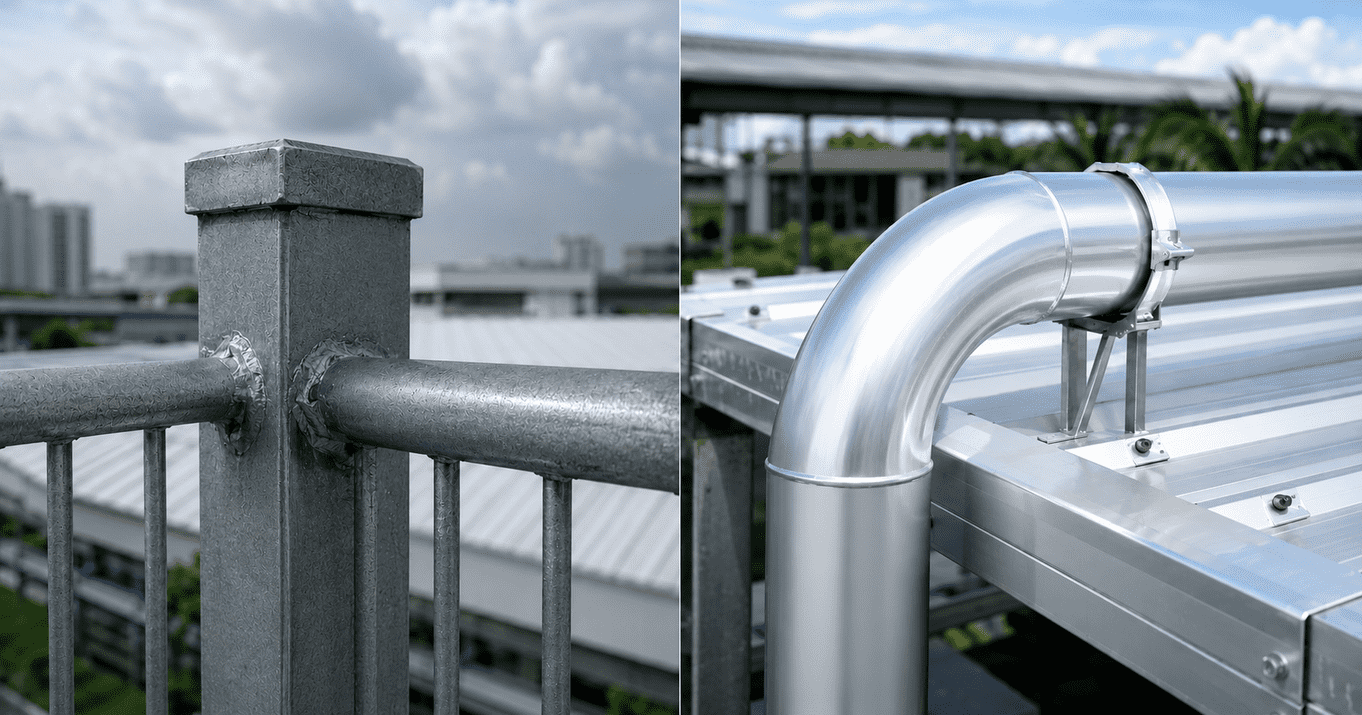
Metal surfaces are everywhere in urban daily life, from gates and railings to roofs, pipes, machinery, and exposed steel structures. Without the right coating, these surfaces can quickly lose their strength and appearance. Rust, peeling paint, stains, and surface damage are more than cosmetic concerns because they can gradually weaken metal and lead to expensive repairs or replacement. This is especially important in Singapore, where the climate can be tough on metal. The warm weather, frequent rain, and high humidity create ideal conditions for corrosion. With mean annual relative humidity around 82%, and levels reaching 100% during prolonged rain, outdoor and semi-exposed metal surfaces need reliable protection to stand up to moisture, heat, and weather changes.
Two common coating options are Galvanized Paint and Aluminium Paint. The first is often used to describe zinc-rich or cold galvanizing coatings, which are mainly chosen for corrosion protection on steel. The second contains aluminium flakes in a resin or solvent-based medium, creating a silver metallic finish while helping form a barrier against moisture, sunlight, and weathering.
Wondering which coating is the better fit for your needs? This post thoroughly explains the key differences so you can make a confident choice.
Galvanized Vs Aluminium Paint: A guide To Selecting The Right Coating
Choosing between Galvanized Paint and Aluminium Paint is not just about picking a colour or finish. It is about understanding what your metal surface actually needs. Is rust protection the main priority? Do you want a clean silver look? Is the surface indoors, outdoors, near the coast, or exposed to heavy industrial conditions? Let’s break it down in a simple way.
1. Compare Them by Purpose
- Use galvanized paint when protection is your main goal. It is a smart choice for rust-prone steel, especially on welded joints, scratched areas, exposed steel, industrial metalwork, and repaired galvanized surfaces. When corrosion resistance matters more than appearance, galvanized or zinc-rich coatings are usually the stronger options.
- Use aluminium paint when you want both protection and a neat metallic finish. It is ideal for surfaces where a silver, reflective look is desired, such as selected steel surfaces, tanks, pipes, roofs, and equipment.
2. Compare Them by Surface Type
For bare steel, anti-corrosion protection should come first. A galvanized or zinc-rich coating is often a good protective base. In more demanding environments, you may need a complete system with a primer, intermediate coat, and topcoat instead of relying on one product alone.
For galvanized steel, adhesion can be tricky. The surface may be too smooth for ordinary paint to grip properly, so cleaning and preparation are essential. A suitable etching primer can help the next coat bond better. Berger Galvaprime Etch Primer is designed as an acidic pre-treatment etching primer for galvanised iron, aluminium, zinc, copper, and other non-ferrous substrates to help improve adhesion.
For previously painted metal, check the condition before recoating. Is the old paint still firm, or is it chalky, peeling, or hiding rust underneath? Loose paint and rust should be removed first, and the new coating must be compatible with the existing paint system.
3. Compare Them by Exposure Conditions
Where the metal sits makes a big difference.
For indoor or sheltered metal, you may not need the same heavy-duty protection required for outdoor steel. For outdoor metal, the coating has to work harder. Gates, railings, roofs, and exposed pipes face rain, humidity, UV exposure, and temperature changes, so they need the right primer and finish system for long-term protection.
For coastal or marine-adjacent areas, coating selection becomes even more important. Salt-laden air can speed up corrosion, so steel in these environments often needs more than a single coat. For industrial or heavy-duty exposure, surfaces like machinery, pipelines, bridges, storage tanks, and steel structures may need specialist primers and topcoats. Berger Epimastic 3100HS is a suitable choice for demanding steel substrates, offering a high-build, surface-tolerant epoxy anti-corrosive primer with resistance to seawater conditions.
4. Compare Them by Durability and Maintenance
Durability is not only about choosing between galvanized and aluminium paint. The coating lifespan depends on the entire system. Key factors include surface preparation, rust removal, primer selection, compatibility between coats, exposure to rain, sun, salt, chemicals or abrasion, application thickness, and maintenance frequency. Berger Epilux 4 can be used as a durable epoxy finish coat in epoxy-based systems, especially where impact and abrasion resistance are important. Berger Luxathane 5075 is another strong option for high-performance finishing on structural steel in aggressive or corrosive environments, offering UV resistance, colour and gloss retention, and long-term recoatability.
When it comes to maintenance, galvanized or zinc-rich paint can be a practical choice for rust protection because damaged areas are often easier to touch up, while aluminium paint may require more care to maintain its metallic silver finish. Ultimately, the right maintenance choice depends on the project, but proper cleaning, priming, and coating will help metal last longer.
Conclusion:
Galvanized and aluminium paint each serve a different purpose, so the best option depends on the surface, exposure, and finish required. Zinc-rich coatings are better suited for rust-prone steel, while aluminium paint is useful when a bright metallic look and protective barrier are both expected. With Singapore’s heat, rain, and humidity, a complete coating system always performs better than paint alone. Visit Berger Paints Singapore to find reliable primers, protective coatings, and finishes for your metal surfaces.