Offshore coatings never fail on day one. They fail months later, out at sea, when salt, humidity, UV, impact, and constant wear start exposing the difference between a system that looked good at handover and one that can actually last. Real long-term performance means more than corrosion protection for a few months. It means durable protection over the years, strong resistance to harsh offshore conditions, and the kind of recoatability that makes maintenance easier and less disruptive. This is exactly why high-quality protective marine finishes are a must. As paint technology innovation continues to expand the options available, Berger Paints Singapore remains focused on coating solutions that deliver reliable performance in real offshore conditions.
Offshore Coating Performance Starts With The Right System:
Offshore structures put coatings under constant stress, but not all parts of the structure face the same kind of exposure. One area may be exposed mainly to sun, wind, and salt-laden air, while another is hit by repeated wet-dry cycles in the splash zone, and another stays continuously immersed in seawater. Add to that hot insulated piping, where heat and trapped moisture can create hidden corrosion risks, and high-traffic decks that face abrasion, impact, and heavy wear. In other words, a single offshore platform can contain several very different corrosion environments at once. That is exactly why one generic coating is rarely enough for the whole structure.
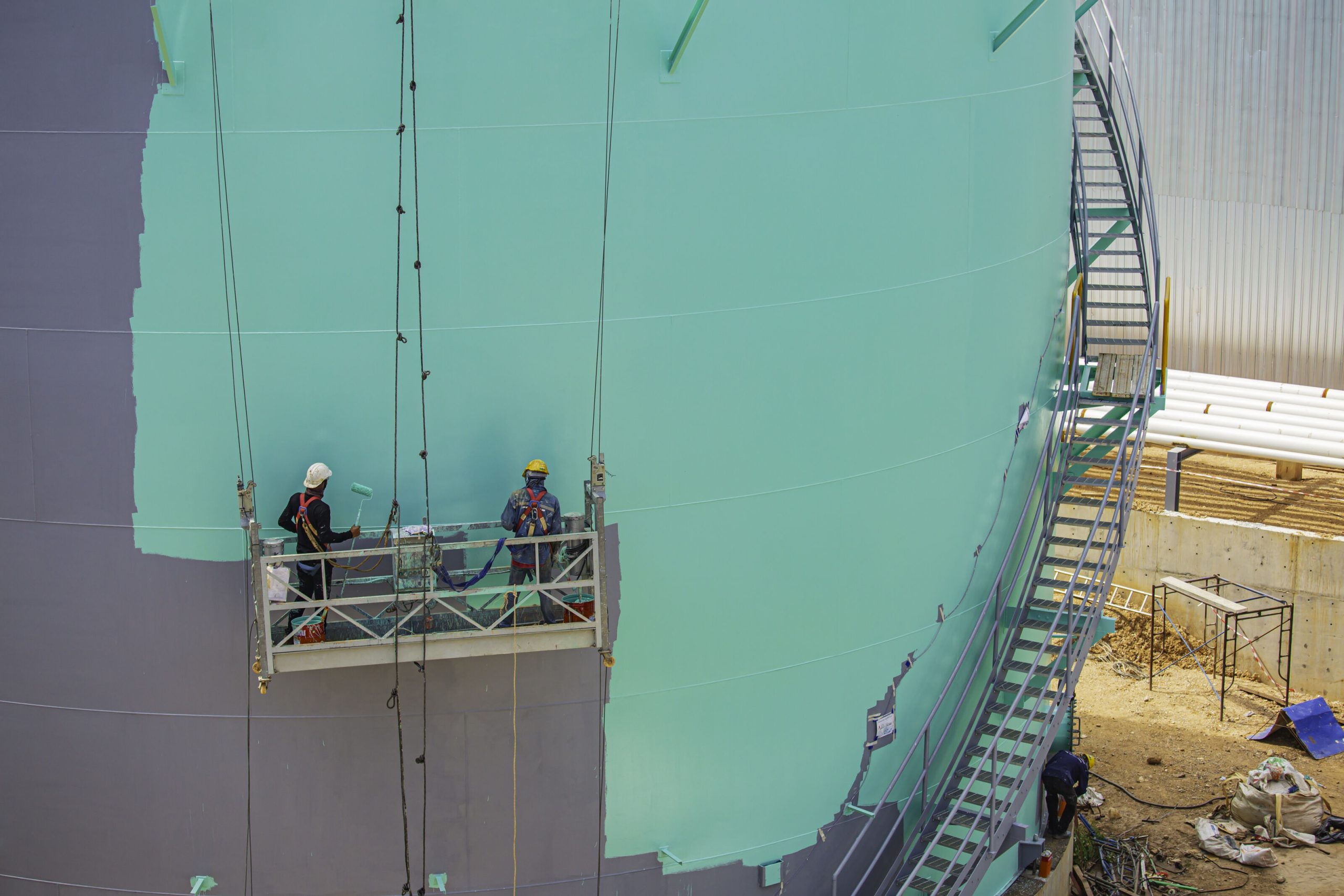
One of the biggest mistakes in offshore protection is assuming one good paint is enough, when long-term performance actually depends on designing the right coating system for each service condition. That system often includes a primer for adhesion and corrosion resistance, a build coat or intermediate layer for barrier protection, and a finish coat for durability and weather resistance. It also depends on stripe coating at edges, welds, and hard-to-cover areas, where coatings often fail first, as well as correct surface preparation and the right film thickness during application. Offshore durability is usually not the result of one product doing everything on its own. It is the result of a complete system working together the way it was designed to.
From Topsides To Splash Zones: Offshore Coating Systems By Exposure Zone:
A. Atmospheric structural steel and offshore topsides
Atmospheric steel and offshore topsides are exposed to salt-laden air, humidity, rain, and strong UV, so they need more than basic corrosion control. A proven long-term system usually starts with an anti-corrosive primer, builds protection with a high-build epoxy barrier, and finishes with a UV-resistant topcoat that helps retain colour and surface integrity. On properly blasted steel, Berger Zincanode 330 can be used for long-term corrosion protection before topcoating, while Berger Luxathane 5075 works well as a durable finishing layer in aggressive offshore environments. This is why those assessing marine coatings in Singapore must look at the full coating system, not just individual products.
B. Splash and tidal zones
Splash and tidal zones are some of the harshest areas on any offshore structure because they face repeated wet-dry cycling, salt attack, impact, and surface abrasion all at once. These conditions are far more aggressive than normal atmospheric exposure, which is why they need tougher systems with higher film build and stronger barrier performance. Heavy-duty epoxy systems designed for severe corrosion service are usually the best fit here, especially where the coating must resist both water movement and physical wear. Berger Steelshield 1200 is well-suited for this kind of demanding exposure, where high-performance protective marine finishes are critical for long-term reliability.
C. Areas where blasting is difficult during maintenance
Full abrasive blasting is not always realistic during short shutdowns or restricted-access repairs. In these situations, surface-tolerant epoxy mastic systems are often the most practical choice because they can still deliver strong protection where preparation options are limited. Berger Epimastic 5100 is a practical choice for this type of maintenance work, particularly where existing coatings remain and full blasting is not feasible.
D. Hot insulated steel and CUI-prone areas
Corrosion under insulation is one of the most overlooked offshore failure points because it develops out of sight and is often discovered only after serious damage has already occurred. Hot insulated piping and process steel need coatings that can handle elevated temperatures and the hidden moisture that may be trapped beneath insulation over time. Berger Epimastic 5100 is suited for maintenance conditions and CUI-related applications where heat resistance is important.
E. Immersed or seawater-exposed steel
Steel that remains immersed or sees frequent seawater exposure needs immersion-resistant anti-corrosive systems that are built for continuous contact with water. These areas place very different demands on coatings compared with topsides, decks, or splash-zone steel, so the chemistry needs to match the actual service conditions.
Not every offshore section should be treated like a hull or ballast tank, which is why zone matching is critical to long-term performance and easier maintenance planning. So, if you are evaluating solutions from different paint manufacturers in Singapore, remember, the real advantage lies in choosing the right coating system for each exposure zone, rather than relying on a single product across the entire structure.
6 Key Questions To Ask Before Selecting An Offshore Coating System:
- What exact zone is this coating protecting? Atmospheric steel, splash zones, immersed areas, decks, and insulated piping all face different service conditions, so the system must match the exposure.
- Is this new construction or maintenance? New-build projects and maintenance work often need different coating approaches, especially when existing coatings or limited access are involved.
- Can blasting be done properly? If full abrasive blasting is not practical, the coating system must be able to perform under more limited surface preparation conditions.
- Is UV resistance needed? Areas exposed to sunlight and weather will usually need a finish that can retain colour, gloss, and surface durability over time.
- Is the steel insulated or heat-exposed? Hot steel and insulated areas may require specialised coatings to manage heat and reduce the risk of hidden corrosion issues.
- How easy will future recoating be? Offshore maintenance is expensive and disruptive, so it is important to choose a system that can be repaired and recoated without unnecessary complexity.
Conclusion:
In offshore environments, long-term performance comes from choosing the right coating system for each exposure zone, not relying on a one-size-fits-all solution. From topsides and splash zones to maintenance repairs and CUI-prone areas, the system must be built around real service conditions, long-term durability, and easier future maintenance. With Berger Paints Singapore, you get proven coating solutions and technical expertise to help you choose the right offshore system and protect your assets for the long term. Contact us today.